Tuesday, January 22, 2008

IPOs don’t guarantee returns on listing day

The year 2007 witnessed 107 IPOs as against 92 in 2006. In 2008 , 150-175 IPOs are expected to come out.The FCH and Reliance IPO got 117 and 72 times oversubscribed. The retail investors were convinced that REL has the resources to execute the projects on time. But in India delays of 3 to 4 years are quite common (For eg Mumbai metro one of which RADAG is a partof is incharged of the Mumbai metro but hte project has still not seen light of the day)and hence some market analysts had advised not to invest in the Reliance IPO. Some retail investors actually sold some of their existing stocks and some even borrowed loans so that they would be able to invest in the IPO. What they dont realise in case the IPO gets oversubscribed(which was likely and it did) the lottery system comes into play.

Now there are 23 crores of shares out of which 30% are reserved for retail invstors .Now 5.1 million retail investors bid,let's assume, for 210 shares for Rs.450 each. So thats a bid of 10.5 crore equity shares for around 6.9 crore shares. Now if we use the lottery system and assuming that a minimum of 15 shares has to given each retail investor then 4.6 million investors will get get 15 shares each. While 0.5 million investors with land with nothing.Even if the shares list at a premium say at double the value around 900 the investors will make a profit of Rs.6750. That by any stretch of imagination is not big profit even for short-term or to take loans or sell existing stocks. So people take a chill pill!!

If you still need a reason not to go crazyon IPOs heres an article from TOI.


IPOs don’t guarantee returns on listing day

Investing in a public issue is not different from buying stocks. So, don’t get carried away by the euphoria in the market

Madhu T | TNN


Investors seem to be mesmerised by initial public offers from companies. Consider this: The initial public offer of Kishore Biyani-led Future Capital Holdings has received thumping response since day one. Its issue was subscribed 131 times by Friday evening. That means the issue has received bids for 84,14,51,848 equity shares as against 64.22 lakh shares on offer. Qualified institutional investors’ reserved portion subscribed 107 times followed by 27 times in retail and 33 times in HNIs category, according to sources. The price band for the IPO was between Rs 700-Rs 765, which analysts felt was on the higher side. Reliance Power IPO almost created a frenzy. From the moment the Anil Ambani-led company finalised its IPO, investor interest had been tremendous. There were stories of people selling their existing holding to participate in the issue. Some people were even ready to borrow to invest in the company. Suddenly, it seemed, everybody wanted at least one share of Reliance Power. No wonder, there were reports of the prices quoting at a premium in the grey market. As per last reports, the issue was subscribed 72 times, with retail investors subscribing 16 times.
What is happening? Why is everybody suddenly flocking to the IPO market? “Well, these two issues had strong promoters behind them. So, you can understand the mad rush to get a piece of action,’’ says an analyst. “However, even otherwise people tend to get carried away once the market is on a bull run. They would chase even obscure issues thinking that IPOs are sure way to make money.’’ That, he says, could prove a costly mistake. This is because IPO are not always supposed to list at a premium. Sure, you may have seen a host of IPOs listing at the stock exchange on a premium, but don’t consider it as a norm.
Don’t rush to fill in the application form for an IPO because suddenly everyone is talking about it. Spend a little time understanding the process, figure out the risk involved before signing on the dotted lines. A company enters the market with
an IPO when it needs money to fund an upcoming project. The company has two ways to fund the project. One, it can borrow from banks or financial institutions. Two, it can tap the market by offering a part of its equity. This has an advantage. The company doesn’t have to pay any interest otherwise it would have given to the bank. Instead it just needs to part with the profit to the investors.
This is exactly what makes IPOs risky. Fine, if they list on a premium and you get out immediately. What happens if you have to stay invested for a while to make money from them? The answer is simple: the company has to perform well. This means you should adopt all the precautions you would normally take while buying a stock in the secondary market. “People don’t realise it. But investing in an IPO is not very different from investing in a stock,’’ says a mutual fund manager. “Analysing a stock already listed in the market is easier because you already have its track record in public. Also, there will be a lot of research report and new available in the media, whereas you don’t have much information on a company entering the market with an IPO. You solely have to rely on the prospectus of the IPO,’’ he adds.
What makes the IPO game even murky is the last minute rush of dubious companies into the market after a prolonged bull run. It has been observed that many unscrupulous promoters enter the market to rob unsuspecting investors of their hard-earned money. “The recent issue of Future Capital and Reliance Power is a classic study. The issues received tremendous response from investors because two powerful promoters were backing these IPOs,’’ says the analyst. “But investors who fail to get allotment in such bumper IPOs often end up putting money in dubious ones, thinking they will make money from them, too.’’ Needless to say, it doesn’t happen always. On the other, they may actually lose money in the process. Remember that we have seen a bull run in the last four years and many dubious IPOs may be getting ready to hit the market. Stay away from them if you want to create wealth.

Monday, January 21, 2008

Brand Failures


Brands are ways of protecting products from failures. Brands create a perception about products. Brands conjure up a emotions in a consumer's minds even before he sees the product on shelf. Today brands have become so entwined with the product that if a product is doing well then it must be the brand which is at fault.Today if a product fails the brand falters too.
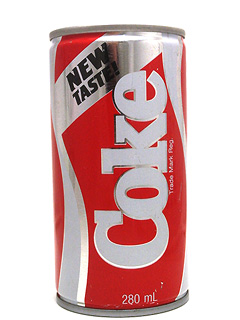
Recently i read a book "Brand Failures:The truth about the 100 Biggesst Brand Failures of All times". Its a really good book for marketing guys. I have posted two examples where big brands have failed either because they didn't really understand the consumer's perception about the brand and making the worst possible mistake of cloning it(Coca-Cola) or by not analyzing the market properly(as in Kellogg's case).

1 New Coke
Think of a brand success story, and you may well think of Coca-Cola. Indeed,
with nearly 1 billion Coca-Cola drinks sold every single day, it is the world’s
most recognized brand.
Yet in 1985 the Coca-Cola Company decided to terminate its most
popular soft drink and replace it with a formula it would market as New
Coke. To understand why this potentially disastrous decision was made, it is
necessary to appreciate what was happening in the soft drinks marketplace.
In particular, we must take a closer look at the growing competition between
Coca-Cola and Pepsi-Cola in the years and even decades prior to the launch
of New Coke.
The relationship between the arch-rivals had not been a healthy one.
Although marketing experts have believed for a long time that the competition
between the two companies had made consumers more cola-conscious,
the firms themselves rarely saw it like that. Indeed, the Coca-Cola company
had even fought Pepsi-Cola in a legal battle over the use of the word ‘cola’ in
its name, and lost.
Outside the courts though, Coca-Cola had always been ahead. Shortly
after World War II, Time magazine was already celebrating Coke’s ‘peaceful
near-conquest of the world.’ In the late 1950s, Coke outsold Pepsi by a ratio
of more than five to one. However, during the next decade Pepsi repositioned
itself as a youth brand.
This strategy was a risky one as it meant sacrificing its older customers to
Coca-Cola, but ultimately it proved successful. By narrowing its focus, Pepsi
was able to position its brand against the old and classic image of its
competitor. As it became increasingly seen as ‘the drink of youth’ Pepsi
managed to narrow the gap.
In the 1970s, Coke’s chief rival raised the stakes even further by introducing
the Pepsi Challenge – testing consumers blind on the difference
between its own brand and ‘the real thing’. To the horror of Coca-Cola’s longstanding
company president, Robert Woodruff, most of those who participated
preferred Pepsi’s sweeter formula.
In the 1980s Pepsi continued its offensive, taking the Pepsi Challenge
around the globe and heralding the arrival of the ‘Pepsi Generation’. It also
signed up celebrities likely to appeal to its target market such as Don Johnson
and Michael Jackson (this tactic has survived into the new millennium, with
figures like Britney Spears and Robbie Williams providing more recent
endorsements).
By the time Roberto Goizueta became chairman in 1981, Coke’s number
one status was starting to look vulnerable. It was losing market share not only
to Pepsi but also to some of the drinks produced by the Coca-Cola company
itself, such as Fanta and Sprite. In particular the runaway success of Diet Coke
was a double-edged sword, as it helped to shrink the sugar cola market. In
1983, the year Diet Coke moved into the number three position behind
standard Coke and Pepsi, Coke’s market share had slipped to an all-time low
of just under 24 per cent.
Something clearly had to be done to secure Coke’s supremacy. Goizueta’s
first response to the ‘Pepsi Challenge’ phenomenon was to launch an
advertising campaign in 1984, praising Coke for being less sweet than Pepsi.
The television ads were fronted by Bill Cosby, at that time one of the most
familiar faces on the planet, and clearly someone who was too old to be part
of the Pepsi Generation.
The impact of such efforts to set Coca-Cola apart from its rival was limited.
Coke’s share of the market remained the same while Pepsi was catching up.
Another worry was that when shoppers had the choice, such as in their local
supermarket, they tended to plump for Pepsi. It was only Coke’s more
effective distribution which kept it ahead. For instance, there were still
considerably more vending machines selling Coke than Pepsi.
Even so, there was no getting away from the fact that despite the proliferation
of soft drink brands, Pepsi was winning new customers. Having already
lost on taste, the last thing Coca-Cola could afford was to lose its number
one status.
The problem, as Coca-Cola perceived it, came down to the product itself.
As the Pepsi Challenge had highlighted millions of times over, Coke could
always be defeated when it came down to taste. This seemed to be confirmed
by the success of Diet Coke which was closer to Pepsi in terms of flavour.
So in what must have been seen as a logical step, Coca-Cola started
working on a new formula. A year later they had arrived at New Coke.
Having produced its new formula, the Atlanta-based company conducted
200,000 taste tests to see how it fared. The results were overwhelming. Not
only did it taste better than the original, but people preferred it to Pepsi-Cola
as well.
However, if Coca-Cola was to stay ahead of Pepsi-Cola it couldn’t have two
directly competing products on the shelves at the same time. It therefore
decided to scrap the original Coca-Cola and introduced New Coke in its
place.
The trouble was that the Coca-Cola company had severely underestimated
the power of its first brand. As soon as the decision was announced, a large
percentage of the US population immediately decided to boycott the new
product. On 23 April 1985 New Coke was introduced and a few days later
the production of original Coke was stopped. This joint decision has since
been referred to as ‘the biggest marketing blunder of all time’. Sales of New
Coke were low and public outrage was high at the fact that the original was
no longer available.
It soon became clear that Coca-Cola had little choice but to bring back its
original brand and formula. ‘We have heard you,’ said Goizueta at a press
conference on 11 July 1985. He then left it to the company’s chief operating
officer Donald Keough to announce the return of the product.
Keough admitted:
The simple fact is that all the time and money and skill poured into
consumer research on the new Coca-Cola could not measure or reveal
the deep and abiding emotional attachment to original Coca-Cola felt
by so many people. The passion for original Coca-Cola – and that is
the word for it, passion – was something that caught us by surprise. It
is a wonderful American mystery, a lovely American enigma, and you
cannot measure it any more than you can measure love, pride or
patriotism.
In other words, Coca-Cola had learnt that marketing is about much more
than the product itself. The majority of the tests had been carried out blind,
and therefore taste was the only factor under assessment. The company had
finally taken Pepsi’s bait and, in doing so, conceded its key brand asset:
originality.
When Coca-Cola was launched in the 1880s it was the only product in
the market. As such, it invented a new category and the brand name became
the name of the product itself. Throughout most of the last century, Coca-
Cola capitalized on its ‘original’ status in various advertising campaigns. In
1942, magazine adverts appeared across the United States declaring: ‘The
only thing like Coca-Cola is Coca-Cola itself. It’s the real thing.’
By launching New Coke, Coca-Cola was therefore contradicting its
previous marketing efforts. Its central product hadn’t been called new since
the very first advert appeared in the Atlanta Journal in 1886, billing Coca-
Cola as ‘The New Pop Soda Fountain Drink, containing the properties of
the wonderful Coca-plant and the famous Cola nuts.’
In 1985, a century after the product launched, the last word people
associated with Coca-Cola was ‘new’. This was the company with more
allusions to US heritage than any other. Fifty years previously, the Pulitzer
Prize winning editor of a Kansas newspaper, William Allen White had
referred to the soft drink as the ‘sublimated essence of all America stands for
– a decent thing, honestly made, universally distributed, conscientiously
improved with the years.’ Coca-Cola had even been involved with the history
of US space travel, famously greeting Apollo astronauts with a sign reading
‘Welcome back to earth, home of Coca-Cola.’
To confine the brand’s significance to a question of taste was therefore
completely misguided. As with many big brands, the representation was
more significant than the thing represented, and if any soft drink represented
‘new’ it was Pepsi, not Coca-Cola (even though Pepsi is a mere decade
younger).
If you tell the world you have the ‘real thing’ you cannot then come up with
a ‘new real thing’. To borrow the comparison of marketing guru Al Ries it’s
‘like introducing a New God’. This contradictory marketing message was
accentuated by the fact that, since 1982, Coke’s strap line had been ‘Coke is
it’. Now it was telling consumers that they had got it wrong, as if they had
discovered Coke wasn’t it, but rather New Coke was instead.
So despite the tremendous amount of hype which surrounded the launch
of New Coke (one estimate puts the value of New Coke’s free publicity at
over US $10 million), it was destined to fail. Although Coca-Cola’s market
researchers knew enough about branding to understand that consumers
would go with their brand preference if the taste tests weren’t blind, they
failed to make the connection that these brand preferences would still exist
once the product was launched.
Pepsi was, perhaps unsurprisingly, the first to recognize Coca-Cola’s
mistake. Within weeks of the launch, it ran a TV ad with an old man sitting
on a park bench, staring at the can in his hand. ‘They changed my Coke,’ he
said, clearly distressed. ‘I can’t believe it.’
However, when Coca-Cola relaunched its original coke, redubbed ‘Classic
Coke’ for the US market, the media interest swung back in the brand’s favour.
It was considered a significant enough event to warrant a newsflash on ABC
News and other US networks. Within months Coke had returned to the
number one spot and New Coke had all but faded away.
Ironically, through the brand failure of New Coke loyalty to ‘the real thing’
intensified. In fact, certain conspiracy theorists have even gone so far as to
say the whole thing had been planned as a deliberate marketing ploy to
reaffirm public affection for Coca-Cola. After all, what better way to make
someone appreciate the value of your global brand than to withdraw it
completely?
Of course, Coca-Cola has denied that this was the company’s intention.
‘Some critics will say Coca-Cola made a marketing mistake, some cynics will
say that we planned the whole thing,’ said Donald Keough at the time. ‘The
truth is we are not that dumb, and we are not that smart.’ But viewed in the
context of its competition with Pepsi, the decision to launch New Coke was
understandable. For years, Pepsi’s key weapon had been the taste of its
product. By launching New Coke, the Coca-Cola company clearly hoped to
weaken its main rival’s marketing offensive.
So what was Pepsi’s verdict on the whole episode? In his book, The Other
Guy Blinked, Pepsi’s CEO Roger Enrico believes the error of New Coke
proved to be a valuable lesson for Coca-Cola. ‘I think, by the end of their
nightmare, they figured out who they really are. Caretakers. They can’t
change the taste of their flagship brand. They can’t change its imagery. All
they can do is defend the heritage they nearly abandoned in 1985.’

Lessons from New Coke Concentrate on the brand’s perception.
In the words of Jack Trout, author of Differentiate or Die, ‘marketing is a battle of perceptions, not products’.
 Don’t clone your rivals. In creating New Coke, Coca-Cola was reversing its
brand image to overlap with that of Pepsi. The company has made similar
mistakes both before and after, launching Mr Pibb to rival Dr Pepper and
Fruitopia to compete with Snapple.

Feel the love. According to Saatchi and Saatchi’s worldwide chief executiveofficer, Kevin Roberts, successful brands don’t have ‘trademarks’. They
have ‘lovemarks’ instead. In building brand loyalty, companies are also
creating an emotional attachment that often has little to do with the
quality of the product.

Don’t be scared to U-turn. By going back on its decision to scrap original
Coke, the company ended up creating an even stronger bond between the
product and the consumer.

Do the right market research. Despite the thousands of taste tests Coca-Cola
carried out on its new formula, it failed to conduct adequate research into
the public perception of the original brand.


Kellogg’s in India

Kellogg’s is, of course, a mighty brand. Its cereals have been consumed around
the globe more than any of its rivals. Sub-brands such as Corn Flakes, Frosties
and Rice Krispies are the breakfast favourites of millions.
In the late 1980s, the company had reached an all-time peak, commanding
a staggering 40 per cent of the US ready-to-eat market from its cereal
products alone. By that time, Kellogg’s had over 20 plants in 18 countries
world wide, with yearly sales reaching above US $6 billion.
However, in the 1990s Kellogg’s began to struggle. Competition was
getting tougher as its nearest rivals General Mills increased the pressure with
its Cheerios brand. Kellogg’s management team was accused of being
‘unimaginative’, and of ‘spoiling some of the world’s top brands’ in a 1997
article in Fortune magazine.
In core markets such as the United States and the UK, the cereal industry
has been stagnant for over a decade, as there has been little room for growth.
Therefore, from the beginning of the 1990s Kellogg’s looked beyond its
traditional markets in Europe and the United States in search of more cerealeating
consumers. It didn’t take the company too long to decide that India
was a suitable target for Kellogg’s products. After all, here was a country with
over 950 million inhabitants, 250 million of whom were middle class, and
a completely untapped market potential.
In 1994, three years after the barriers to international trade had opened in
India, Kellogg’s decided to invest US $65 million into launching its number
one brand, Corn Flakes. The news was greeted optimistically by Indian
economic experts such as Bhagirat B Merchant, who in 1994 was the director
of the Bombay Stock Exchange. ‘Even if Kellogg’s has only a two percent
market share, at 18 million consumers they will have a larger market than in
the US itself,’ he said at the time.
However, the Indian sub-continent found the whole concept of eating
breakfast cereal a new one. Indeed, the most common way to start the day in
India was with a bowl of hot vegetables. While this meant that Kellogg’s had
few direct competitors it also meant that the company had to promote not
only its product, but also the very idea of eating breakfast cereal in the first
place.
The first sales figures were encouraging, and indicated that breakfast cereal
consumption was on the rise. However, it soon became apparent that many
people had bought Corn Flakes as a one-off, novelty purchase. Even if they
liked the taste, the product was too expensive. A 500-gram box of Corn
Flakes cost a third more than its nearest competitor. However, Kellogg’s
remained unwilling to bow to price pressure and decided to launch other
products in India, without doing any further research of the market. Over
the next few years Indian cereal buyers were introduced to Kellogg’s Wheat
Flakes, Frosties, Rice Flakes, Honey Crunch, All Bran, Special K and Chocos
Chocolate Puffs – none of which have managed to replicate the success they
have encountered in the West.
Furthermore, the company’s attempts to ‘Indianize’ its range have been
disastrous. Its Mazza-branded series of fusion cereals, with flavours such as
mango, coconut and rose, failed to make a lasting impression.
Acknowledging the relative failure of these brands in India, Kellogg’s has
come up with a new strategy to establish the company’s brand equity in the
market. If it can’t sell cereal, it’s going to try and sell biscuits. The news of
this brand extension was covered in depth in the Indian Express newspaper
in 2000:
The company has been looking at alternate product categories to
counter poor off take for its breakfast cereal brands in the Indian
market, say sources. Meanwhile, the Kellogg main stay – breakfast
cereals – has seen frenzied marketing activity from the company’s end.
The idea behind the effort is to establish the Kellogg brand equity in
the market.
‘The company is concentrating on establishing its brand name in the
market irrespective of the off take. The focus is entirely on being present
and visible on the retail shelves with a wide range of products,’ explains
a company dealer in Mumbia.
As per the trade, Kellogg India has disclosed to the dealers its intention
of launching more than one new product onto the market every month
for the next six months.
These rapid-fire launches were supported with extensive ‘below-the-line’
activity, such as consumer offers on half of Kellogg’s cereal boxes. Although
most of the biscuit ranges have so far been a success with children, due in part
to their low price, Kellogg’s is still struggling in the cereal category.
Although the company tried to be more sensitive to the requirements of
the market, through subtle taste alterations, the high price of the cereals
remains a deterrent. According to a study conducted by research firm
PROMAR International, titled ‘The Sub-Continent in Transition: A strategic
assessment of food, beverage, and agribusiness opportunities in India in
2010,’ the price factor will restrict Kellogg’s from further market growth.
‘While Kellogg’s has ushered in a shift in Indian breakfast habits and adapted
its line of cereal flavours to meet the Indian palate, the price of the product
still restricts consumption to urban centres and affluent households,’ the
study reports.
Kellogg’s tough ride in India has not been unique. Here are some further
examples of brands which have managed to misjudge the market:
 Mercedes-Benz. In 1995 the German car giant opened a plant in India to
produce its E-class Sedan. The car, which was targeted at the growing ranks
of India’s wealthy middle class, failed to inspire. By 1997, the plant was
using only 10 per cent of its 20,000 car capacity. ‘Indians turned up their
noses at the Sedan – a model older than those sold in Europe,’ reported
Business Week at the time. ‘Now Mercedes has to reassess its mistakes and
start exporting excess cars to Africa and elsewhere.’
 Lufthansa. Germany’s Lufthansa airline joined forces with Indian company,
the Modi Group, to launch a new domestic private airline, Modi-
Luft, in 1993. However, three years later ModiLuft had gone bust and
Lufthansa filed a lawsuit against one of the Modi brothers, claiming he
had used funds obtained from the German company in other ventures.
In return, the Modi Group accused Lufthansa of charging too much and
of producing defective planes.
 Coca-Cola. The Coca-Cola company understood that distribution was the
key to building a strong Indian brand. It therefore decided to buy out one
of India’s most successful soft drink companies and manufacturers of
popular soda brand Thums Up. However, although this gave Coca-Cola
an instant distribution network, Thums Up remained more popular than
Coke for many years. Most Indians initially thought that the new entry
to the market wasn’t fizzy enough.
 Whirlpool. When Whirlpool launched its refrigerators on the Indian
market, it found the market unwilling to buy larger sizes than the standard
165 litres.
 MTV. When MTV India was launched, the aim was to bring Western
rock, rap and pop to the sub-continent. Now, however, the music policy
has shifted to accommodate Indian genres such as bhangra.
 Domino’s Pizza. Initially, Domino’s Pizza transferred its Western offerings
direct to the Indian market, but the company eventually realized that it
had to bow to local tastes, as Arvind Nair, chief executive officer at
Domino’s Pizza India explains. ‘Initially, our focus was to stay only in
metropolitan areas, but in the last two years we have felt the need to spread
ourselves into “mini metros” and B-category towns. We have also experimented
with our taste options, especially when we went into smaller
towns. We have focused on more regional flavours now,’ he says. As a result
of this change of strategy, Domino’s came up with localized toppings such
as ‘Peppy Paneer’ and ‘Chicken Chettinad’. This move was greeted with
a wry smile from Domino’s main Indian competitor, US Pizza, which was
the first to offer local topping. ‘In 1995, when we offered tandoori chicken
and paneer toppings, some made fun of us saying, why not offer spaghetti
and pasta toppings? The same companies are now offering chole and spicy
masala pizzas,’ says Wahid Berenjian, the managing director for US Pizza.
He told the Hindu newspaper Business Line that US brands such as
Domino’s made the mistake of thinking that US tastes are universal. ‘You
cannot change the taste buds that were developed more than a thousand
years ago,’ he said.
 Citibank. When Citibank entered the Indian market, the firm’s aim was
to target only high-income earners. But, in the words of the Business Line
newspaper, Citibank soon realized that ‘in India it makes sense to go the
mass banking way rather than the class banking way.’
One of the reasons why Kellogg’s and these other brands’ passage to India
was not smooth was because they had been blinded by figures. The Indian
population may be verging on 1 billion, but its middle class accounts for only
a quarter of that figure. However, a 1996 survey conducted by the Indian
National Council on Applied Economic Research in Delhi found that the
sub-continent’s ‘consumer class’ numbers are around 100 million people at
the most, and that buying habits and tastes vary greatly between the Indian
regions. After all, India has 17 official languages and six major religions
spread throughout 25 states.
As a result, only those companies which are in tune with India’s many
cultural complexities can stand a chance. One of the companies which has
managed to get it right is Unilever. However, the conglomerate has had a
head start on those Western companies which entered the market after 1991.
Indeed, Unilever’s soap and toothpaste products have been available in India
since 1887, when the sub-continent was still the crown jewel of the British
Empire. The secret to Unilever’s longevity in India is distribution. Hindustan
Lever Limited (Unilever’s Indian arm) has products available in a staggering
total of 10 million small shops throughout rural India.
As for Kellogg’s, it remains to be seen whether its move into other product
categories, such as snack food, will be able to help strengthen its brand. The
dilemma that it may face is that if it becomes associated with biscuits rather
than cereals, core products like Corn Flakes could become a marginal part
of the company’s brand identity in India.
‘Kellogg’s is caught in a bind,’ one Indian brand analyst remarked in India’s
Business Line newspaper. ‘It realises that cornflakes can make money only in
the long haul, so it needs a product which will give it some accelerated growth
and the tonnage it is desperately looking for. However, its area of strength
worldwide lies in breakfast cereal and not in the snack food category.’
However, other impartial Indian commentators are more optimistic about
Kellogg’s future prospects within the sub-continent. Among those who
believe Kellogg’s will eventually succeed is Jagdeep Kapoor, the managing
director of Indian marketing firm Samiska Marketing Consultants. ‘With
every product offering, Kellogg’s chances improve based on its learning in the
Indian market,’ he says.
Only time will tell.

Lessons from Kellogg’s
 Do your homework. Why did Kellogg’s cereals have a tough ride in India?
‘It was just clumsy cultural homework,’ says Titoo Ahluwalia, chairman
of market research company ORG MARG in Bombay.
 Don’t underestimate local competitors. Although Indian brands were worried
they would struggle against a new wave of foreign competition following
the market opening of 1991, they were wrong. ‘Multinational corporations
must not start with the assumption that India is a barren field,’ said
C K Prahalad, business professor at the University of Michigan, in a
Business Week article. ‘The trick is not to be too big.’
 Remember that square pegs don’t fit into round holes. When Kellogg’s first
launched Corn Flakes in India it was essentially launching a Western
product attempting to appeal to Indian tastes. Globalization may be an
increasing trend, but regional identities, customs and tastes are as distinct
as ever. It may be easy for brand managers of global brands to view the
world as homogenous, where consumer demands are all the same, but the
reality is rather different. ‘There is a bigger opportunity in localizing your
offerings and the smarter companies are realizing this,’ says Ramanujan
Sridhar, chief executive officer at Indian marketing and advertising
consultancy firm Brand Comm.
 Don’t try and make consumers strangers to their culture. ‘The rules are very
clear,’ says Wahid Berenjian, the managing director for US Pizza (which
has successfully launched a range of pizzas with Indian toppings) in an
article for the Hindu newspaper, Business Line. ‘You can alienate me a bit
from my culture, but you cannot make me a stranger to my culture. The
society is much stronger than any company or product.’ Brands who want
to succeed in India and other culturally distinct markets need to remember
this.

Friday, January 18, 2008

Know more about SP Jain Interview

Why and how does SP Jain give interview calls before CAT?
By Apurv Pandit and Sonam Vij
Published: August 17, 2006
Print Email

image Mumbai's SP Jain Institute of Management and Research (SPJIMR) Joint Director Prof Sunil Rai answers this and more in a PaGaLGuY.com exclusive interview.

SP Jain is known to send GD-PI calls to candidates even before the CAT is held. Why and how is it done?

We do respect the CAT, which is an entry-level examination for the MBA education. However, how can you have the full idea about somebody’s potential using a two hour test? So we have frameworks using which we can spend more time in evaluating a candidate. How we do it is we use various criteria like good continuous education, versatility and good value system, work experience and more. We look at the candidates’ application forms and categorize them then on S, A, B and C grades. S is Super, A is Good, B is Satisfactory and so on.

So in the good continuous education criterion, all three of your class X, XII and graduation degree should have had good scores and from reputed institutions. If two school education boards and one university have seen you as a consistent performer, for instance if you have 90 in tenth and twelfth and a distinction in your college and that too from reputed schools and college, then we give you an S. Or if you have done well but not from a reputed college then we give you an A.

Second is what is called versatility and a good value system. If you have been put through some adversities in life, it makes you a better suited person. So a single parent child for example, who has seen a single mother or father struggle in life and has himself or herself struggled to complete education, has proved himself or herself in a challenging situation. Then there is the family background parameter where things like honesty are valued, for instance somebody’s father is an academician or the mother is a government servant or the grandfather was a freedom fighter, then you know the person has definitely picked up a good value system. So again, we rate this criterion on S, A, B or C. Same for quality of work experience.

Now that we have so many criteria, we prioritize. To get an interview call you have to be an S at least in one criterion. So if you are a person who plays hockey for the Indian team or have an NCC certificate you have an S. So even you have an academic A, because of this S you will get an interview call. Or if you are an academic S but you are a B in the versatility criterion you’ll get the call. But in any case, you should not be below B in anything and you should be an S in at least one thing. I think it is a very good set (of candidates) we get out of such combinations.

So once we have this shortlist, we interview them. After the CAT results are out, we use their CAT performance to sort this list. Now all the people who are eligible for SP Jain will be sorted in the descending order of their CAT performance. So the CAT is taken as a criterion but not as the primary criterion. You have proved yourself in academics, you have proved yourself in life, you are a good person and you also do well in a test. That is what we are looking at. I think it is the right way of looking at admissions. So you can be an ace in CAT but if you are not a good human being then we don’t need you.

What are the criteria for the interview calls that you send after the CAT results are out?

CAT is also a criterion. If you are an S in CAT then you receive a call. However there is weightage given to the rest of the parameters too, so even if you are a CAT S but you are not at least an A in academics, you will not make it to SP Jain.

How much time do you spend on each candidate’s CV before you take a call on whether he or she is an S or A or B in a parameter?

We have parameterized some things in the online application stage. We already have a list of reputed colleges on our server so when your percentage and college name is selected by you the computer program can pick it up and grade you accordingly.

So the computer already has a database of the good colleges?

Yes, which we keep on updating using the UGC list, the state department, student feedback and from our own experience. So for most of the parameters it is a computer-generated thing. But of course for the value system criterion, we have to manually search the forms.

How many people are roughly short listed for interview in the stage before CAT?

We receive about 15,000 applications each year. We generally shortlist about 60 pc of our total shortlist for the interview stage before the CAT takes place.

And how many of this 60 pc usually get a final call?

A proportionate number.

Can you tell us the dynamics of the two-stage group interview process that SP Jain follows?

There are two panels, which test you in a group interview. It’s about how you perform in a team. If you combine me and him with her and if you are targeting a business and the three of us don’t make a good team then the thing doesn’t happen. Therefore you should know how to perform in a team. That’s why we have a group interview concept.

There are two interview panels that see you. So out of panel A and panel B if both rate you as an S then you are through. But if Panel A says you are an S and Panel B says you are a C then there is a problem. The two panels then discuss about it and you are graded later. Sometimes there is a re-interview in which the same panels sit together or we offer it to a third panel because it is basically a judgmental decision.

How does SP Jain treat work experience before CAT?

We have four streams and of them for the marketing and finance there is no work experience criterion. Even with low work experience or no work experience, if you are excellent in studies and CAT you will still get a call for marketing and finance. Do well in the interview you will get final admission for marketing and finance. But for information management and operations experience is a must. We do not like to take anybody with less than one and a half or two years work experience. The students have to finalize their specialization at the time of applying. We believe that one needs to be focused about what he wants to do later.

How good is the judgment of students in selecting their specialization given that many of them have never worked fulltime before?

As far as marketing and finance is concerned I give it to them, their judgment is fairly good because the youth today is able to make out where they would fit in. Generally outgoing people with good communication skills, who like traveling and meeting people, are the ones who usually choose marketing. People with affinity to numbers take up finance. If people wish to change their specialization after a year they can definitely do that but they have to debate it out with us. The change should be a decision arrived out of logic and not out of frustration of not doing well. The decision should be informed and intelligently taken and not an impulsive decision. It shouldn’t be that your pal is taking finance so you also plan to change your specialization to finance.

SP Jain also asks for SOPs...

This is to check the value system of the people as well as know certain individual traits. For example a person may perform better in teams, he maybe a team player. So I ask him to write three or four of his experiences. However smart the person maybe and whatever coaching classes he must have been through, we are capable to find out the truth and make out the differences.

The SP Jain website mentions about two one-year courses… one is the EMBA and the other is PGDM. How are the two different?

The EMBA or Executive MBA is actually a one and a half year course. The difference between the two courses is that the executive MBA is for working professionals who have not left their jobs. They only come to campus for nine days in three months. In those nine days you are totally with us but the rest of the three months you remain in touch with us online on a weekly and fortnightly basis. Submit your assignments checked by your mentor in your work place to the in-house guide. That way you remain in touch six times in one and a half years. The one year PGDM on the other hand is for working professionals with high experience who have left their jobs to pursue this course.

How does your PGDM compare to ISB’s one year programme?

They are two different products. ISB’s programme is a general MBA whereas ours is a focused MBA. We are firstly focusing on information management in the operational domain and secondly the student focuses on the role he would like to take up. We customize the training according to the role each student wants to do

You have an Entrepreneurship Cell in your campus. Can you tell us how it works?

Every manager has to perform three different functions: that of a leader, a manager and an entrepreneur. Entrepreneurship makes a manager risk-taking, innovative and experimental and that is what is required in fast pace business of today. No risk, no gains. Time will tell how many will actually become entrepreneurs. We just started with the Cell last year. We have also started a program and the first batch is on. Sixteen of them will become entrepreneurs already in some time. I am expecting more and more students to take it up because more ideas are coming up.

Does S P Jain help these students in getting funds for their entrepreneurial ventures?

We have faculty who have experience in the industry, who have worked in their field and now come to SP Jain. We follow the practioners method, like how a doctor is taught by another doctor. Have you seen a surgeon teaching another surgeon who has never performed a single operation? Same is the case here. How can a professor teach students marketing if he hasn’t sold a single soap? Our entire marketing faculty has once been a part of industry for at least five to ten years. Therefore we have practioners on the faculty board including our own Dean. Therefore our students get excellent in-house consulting for auditing of ideas. Were making SP Jain a very good place for incubation of ideas.


MBA calling: How to prepare for the personal interview

Though there is no dearth of articles on interview etiquette, there is an actual shortage of good articles on the most crucial factor in an interview -- the interviewer's questions and your answers. Many problems candidates have include nervousness and stammering in an interview, which is directly related to the candidate's unfamiliarity with the questions and a general lack of preparation.

TCYonline.com experts present for the readers of Rediff.com, a few of the most commonly asked interview questions. There are no ready-made answers to the questions, instead, the attempt is to try to help you arrive at the correct answer yourself, so that you sound natural and coherent in an interview. Ultimately, an interview is a mirror to see your inner self and a subjective, specific and honest presentation is the key to success.

Q. Tell me some thing about yourself.
This is how most interviews begin and this is one question you cannot afford to be unprepared for.

To frame a good answer it is always helpful to know what is it that the interviewer wants to know about you. An interviewer would like to know.

~ Your educational background
~ Your work experience, if any
~ Your strengths and achievements
~ About your family background
~ About where you are coming from academically, professionally

You should be short and crisp about all the points mentioned above. If the interviewer needs an elaboration s/he will ask you.

Q. Why do you want to join this institute?
This is one question you should answer honestly and pragmatically. Ideally you should choose an institute based on certain criteria. Such as

~ Ranking/ placements
~ Courses offered
~ Fee
~ Location

It is good to do a little research on the institute, its placements and about certain specialisation(s) it may be known for. An informed analysis of the institute can convince the interviewer that you are sincerely interested. It also helps you in identifying parameters critical for you while choosing the particular institute.

Q. Which other institutes have you applied to?
This is a question that is very much linked to the previous question. For example, if you say that you had chosen IRMA because you have a flair for Rural Marketing and while answering this question you don't mention the name of other institutes known to offer quality course in Rural Marketing you are in trouble. So these two questions are to be prepared simultaneously avoiding conflicts in answers.

Q. How will you add value to this institute if you make it through?
This is an opportunity to showcase your strengths but remember it is essential that your strengths should be supported by related achievements.

Your background and circumstances can also be your strengths and can be used as equally important points in supporting your answer.

Remember, an achievement doesn't necessarily mean a prize. It can also be your successfully coming out of a crisis situation or you managing to run a small project with your friends.

Q. What do you consider your biggest failure?
CAUTION: This is not an opportunity to pour out your darkest secrets. This is a question that is best played down. For example, if you are overweight, you may mention -- "I have been trying to shed weight for the last few years but couldn't do it still." The answer should be framed so that it does not reflect badly on your career thus far, or your future career.

Another way of answering would be a smart statement: "I have never allowed failure to drag me down. I just got up, took my lesson and picked my way forward." Here it would help to have a certain experience picked out.

Q. Why have you chosen this career?
This is an area where a mature and realistic answer is expected. People choose their career based on several reasons, such as:

~ What is your aptitude?
~ What kind of a social, professional and personal environment do you desire?
~ What is your background and achievements?
~ What motivates you?
~ What activities do you enjoy?

Q. What is the last book you read?
Many experts would tell you that you should know the ins and out of the books and everything about the author and his writing style. If you know these facts, it can't hurt, but if you are not the kind of a person who would research the background and other facts about books, but read for fun, it is okay to mention it. The only thing is that your answer should be natural, convincing and rational.

For example, if the interviewer asks you for more detail about the author you may just reply.

"I'm sorry but I haven't read much about the author. But I liked this book because..."

Q. How will your contribute to this campus if we select you?
This is a question that directly relates to your strengths and aspiration. Take this as an opportunity to showcase the various qualities that you possess which may benefit the college, academically, culturally or in any other way.

Q. Where do you see yourself 10 years from now?
This is not when you start throwing in fancy designations. Instead, concentrate on the kind of roles people in those designations are expected to play. If the question specifically asks for your professional goals then stick to it, otherwise it is a good idea to balance it with your personal goals.

Q. Who is your role model?
Your role model can be anyone � a public figure or even someone from your family. It is a good idea to know a lot about the person you would make your role model. It is important to focus on the qualities that inspire you and how you try to inculcate those qualities in yourself. It is always important to tell why s/he is different from her/his peers.

Q. Do your have any questions for me?
"No" would be a bad answer. It is good to have a few questions that relate to the academic and cultural environment of the institution. This will show your enthusiasm.

In a nutshell, an interview just analyses how balanced and rational you are. So, just be yourself! Preparing yourself for the questions listed above will give you the confidence to handle even unexpected questions. You should ideally write down your answer to these questions (but please don't try to mug up answers you think would be 'ideal') and practice giving interviews along these lines with a friend.

Friday, January 11, 2008

Thursday, January 10, 2008

The New Tata Nano...

The Tata Nano Launch


Following is an excerpt from an interview with Ratan Tata...

Q: If one would really start at the very beginning, what really was the trigger for the idea?


Basically, just as an Indian, you know, I would be as concerned of my-self as one of the rickshaw pullers in Calcutta running with a rickshaw behind with two people sitting back. It bothered me. My mind will start thinking: Can we put a bicycle there? The same thing bothers me when I visit a plant also. The workers are bending over when the work piece should be raised or maybe they should sit in a pit or what-ever. Because I think human fatigue is something that affects safety.

So in this particular case, you could not help but notice that there were three or four family members on a scooter, the kid standing in the front, the guy driving the scooter and the wife sitting side saddle holding a little kid. And when you're driving a car, you certainly say, Oh my god, be careful, they may slip. Add to that slippery roads and night time too. Any of these reasons can be dangerous for transport. That does not mean that the scooter should not exist because scooters are an evolution of bicycles and it is all the path of prosperity.

And this seemed like a dangerous form of transport. So, I, to be frank if I might go through the process, I asked myself, what if you put two wheels on the back that will give greater stability? If you build a bar over the top could you save the occupant? I will stop there and come back.


Last year, to my surprise I found that BMW had produced a scooter with the same bars that I had thought about with rubber bumpers on the side so that if they (the riders) fell they wouldn't hurt themselves and the seat there had a seatbelt. And I thought, that's exactly what I had thought about. The fact was that BMW had put this out though it was not successful and they had withdrawn it. But, someone else had also thought of the same thing. It had only two wheels not three.

So, I set about thinking, can we make a four wheel vehicle from scooter parts initially and I, in fact, addressed an Automotive Component Manufacturers' Association (ACMA) meeting saying that can we all get together produce an Asian peoples' car. To this I never got very much response. The idea was a really low cost car that Malaysia, Indonesia and India could come together to produce jointly.


We could produce one part, they could produce another part, and each one would exchange and have the rights. In fact, even for the Indica, I went to ACMA. I said can we have an Indian car because no car has been designed in India. That time I was actually criticised. This time I had no response. So, in this particular case I had no response. In fact, the person who showed some encouragement was Brij Mohan Munjal, but we never really took it further.

And then we found that scooter parts were probably a real limitation. So we changed tack and we said let's take a clean sheet of paper and start thinking and conceiving a car. Why a clean sheet of paper? Because we thought that if we had to do something that was different, then we probably didn't want to have a legacy in any way or form and so we thought we should look at everything from scratch. And, initially I thought we could even have a car made from engineering plastics.


But we found that several of these concepts do not lend themselves to either cost or volume manufacturing and have had to move away from that to a more conventional kind of car. So, that led us to configure a small car which would be not a three wheeler but four wheels. It would be a car, a full-fledged car and we started again in an evolutionary manner and we thought, and if I might say so, it really started with being a four wheel rural car.

Do we have rolled up plastic curtains instead of windows? Do we have openings like auto rickshaws have instead of doors or do we have a safety bar? As we went on, we had many early concepts that went that kind of way till we finally decided that the market does not want a half car. The market wants a car.

And if we want to build a peoples' car, it should be a car and not something that people would say, Ah! That's just a scooter with four wheels or an auto rickshaw with four wheels or not really a car and I was reminded of a very interesting concept that Chrysler did many years ago when they developed an Asian car. It was a plastic car and for those who may not know or remember, it was one piece, the whole car from front bumper to back bumper, moulded in one piece of plastic, half of it and the other half. And it was welded together to make the whole car.

The most expensive part of any manufacturing unit is the paint shop. So this car with pigmentation with plastic parts, you didn't have to paint it, but no one liked the car because, in my view (I drove the car) it was very nice, but people wanted a real car and not something that someone would say was not a car, this is half-a-car or three-fourths of a car.

So, with that kind of experience in mind, we decided we would do a car that would really pare the cost of a fair car. It has obviously been a long journey. It has been a longer journey than it should have been. I think we have easily taken two years or 18 months more than it should have been.

A Bigger Brand Idea: SRK or Aamir?

With both Taare Zameen Par and Om Shanti Om doing well at the box office, a new debate is ensuing the Indian audiences' and brand management team's minds as to who is a bigger brand-SRK or Aamir.

SRK ,with his latest release which he himself,i think, considers not to be a master-piece or for that matter a well scripted movie, is surely having the last laughs . While others need to have good scripts and seasoned actors to achieve success at the box-office, SRK has done it without a good script or actors.Call it s great marketing campaign or anything else but no one can deny he's the King of Bollywood!

Aamir on the other hand has matured as a actor. His recent movies are not your run of the mill movies. Whether it's Lagaan,RDB or TZP he broken new grounds with each movie. And Aamir consistently produces quality movies year after year.

So who is bigger brand.Below is an article from ET. Lets read...

SRK impact visible beyond films

/photo.cms?msid=2688032
Partha Sinha
Chief Strategy Officer, Publicis
South & South-East Asia

A ‘brand idea’ becomes big when it starts to create an impact beyond the category it operates in. Shah Rukh as an idea impacts much beyond his films. The genesis of brand Shah Rukh lies in the way mainstream urban youth of India started to view themselves. Focused yet happy-go-lucky, politically incorrect, not 100% perfect but at ease with their imperfection and most importantly increasingly recognized as the centerpiece of the society. That was the birth of ‘Rahul’.

Due credit should go to the brand manager Karan Johar for crafting the brand and sustaining it. But ‘Rahul’ was the most marked arrival of brand Shah Rukh. He may have acted in blockbuster movies before that but Rahul made him a strongly identifiable social force. Unlike Aamir, you consume Shah Rukh as Shah Rukh in every movie he acts in. You consume a certain sense of optimism, you consume a disarming charm, you consume a sense of self-confidence. In other words, through brand Shah Rukh, you every time end up consuming the spirit of mainstream urban youth of today’s India.

Well, Rahul has undergone changes –– in brand management cliché ‘the brand has evolved’. There’s a change in the brand management team as well –– Farah Khan has joined the team. But somewhere the core of real urban youth has remained unchanged. In the evolved avatar, brand Shah Rukh has acquired some other traits which are extremely identifiable –– internationally competitive, comfort with global citizenship, the new-found confidence of reverse colonisation etc. In many ways, brand Shah Rukh keeps on reflecting the deeper motivations of today’s young India and the youthisation attempt rest of the country is going through.

The impact of the brand idea Shah Rukh comes alive in the way KBC 2 got reinterpreted. From the awe-inspiring, shudh-hindi speaking, patriarchal Amitabh the show became comfortable, Hinglish speaking and an active encouragement for the participants to go for the biggie. That’s the impact of youthasiation in the society. There’s an active encouragement to go for any goal and brand Shah Rukh embodies the spirit. Shah Rukh doesn’t have a trademark hairstyle, he doesn’t have a trademark voice––the typical things that used to create fan following.

Ask anyone, they can’t pinpoint any reason why they like Shah Rukh. Some will say his dimpled smile, others will say his personality. This actually makes me believe that what people are interested in is the idea and myth of Shah Rukh rather than the physicality of Shah Rukh.

Aamir is the biggest brand idea
/photo.cms?msid=2688039
Prathap Suthan
National Creative Director, Cheil Worldwide, SW Asia

Aamir Khan is the big, bigger and the biggest brand idea. No questions. Let me give you the full alphabetic Monty. Tried, tested and effective.

Ability: Aamir can act––for brands, and not for himself. SRK unfortunately cannot assume a brand’s genes. He overpowers every brand, and keeps cloning himself. Branding: Something about Aamir reassures me that the brand will come first. Bigger than him.

Communication: Aamir effortlessly connects and touches people every time. It’s a craft that amplifies brands. Dexterity: Aamir can bring alive any advertising character. That’s because he also knows a brand isn’t a stereotype. Sadly, SRK only delivers repetition. Empathy: As consumers warm up more to Aamir, brands get to yank more heartstrings and purse strings.

Friendliness: Aamir effectively removes barriers, while Shah Rukh inadvertently builds them. Consumers must get intimate with brands, not be intimidated. Grace: Aamir is elegance at work. Not sculpted artificiality. Honesty: Aamir is genuine and trustworthy. Not a Botox spectacle. Intensity: As relationships are cardiac, consumers will see a brand’s sincerity in Aamir’s depth. Jest: Aamir has a wonderful lighter side. People love someone who can laugh at himself.

Knowledge: Aamir has grey cells in abundance as most brands hate brawn overdose. Leadership: He redefines benchmarks with every film, and so can he with brands. Machoness: Aamir isn’t about mean moustaches, he overtakes SRK with intelligent muscle. Newness: Aamir refreshes. SRK repeats. Simple. Originality: With constant newness, Aamir brings freshness to advertising.

Patriotism: With unbridled Indianess, Aamir keeps rousing the nation.Quality: Aamir also brings a rare uncommonness. Much like many brands, I don’t ache for mass mediocrity. Respect: As acclaimed by critics, only Aamir can transfer his standing to brands. Softness: As all brands don’t need six packs, Aamir makes brands warmer. Talent: Aamir is multi-dimensional, multi-persona. SRK is monochromatic. How many more dancing brands do you need? Uniqueness. Instead of a rampant SRK, Aamir is as special as any brand.

Value: Carefully under exposed as he is, Aamir is full bang for the advertising buck. Wisdom: Aamir’s marketing acumen and creative judgment are legendary –– right up to the Oscars. X Factor: Aamir is the multiplication factor. Youth: Aamir’s zest defines India’s bristling youth. Zeal. And as brands need to evolve, only Aamir brings that advertising resolve. So who’s the bigger brand idea? Aamir who can become your brand, or Shah Rukh who can only be his own brand?


And that’s why he is a big brand idea. Amitabh’s Vijay was the voice of the marginalised section of the society. Shah Rukh’s Rahul is the voice of the mainstream youth. The youth which has got well accepted in the society and is driving things forward. Rahul undoubtedly is the biggest social brand idea post Vijay.
 

hit counter code