Monday, May 26, 2008

In Mumbai Bollywood,Cricket and VJTI Sells

Newspapers today are obsessed with VJTI . So much has been written about VJTI.TOI has specially assigned Hemali Chappa to scoop all the dirt she can find on VJTI.

Now it looks like DNA has also joined the gang.

I can imagine the DNA editor saying "Listen up people. I want you to blow this thing so much, i want you to sex up this story so much that it makes the Times of India look like Loksatta. If a prof misses a lecture i want to know about it, if the director's son buys a new underwear i want to know about it. Lets get into their lives people."

Thursday, May 22, 2008

The Next "Sub-Prime" Crisis


Ever wonder which is the next crisis which could jeopardize the world's economy.

Well Peter Schiff writing for www.prudentbears.com points out it could very well be the credit card. The US credit card debt now stands at a whopping $957 billion or $3000 per American.(The sub-prime market is $1 trillion in comparison.)

There is a change in the behavior of American consumers. Credit cards earlier were used for unavailable cash and purchases were made over a period of time. But now the credit card is used for availing credit and is used for everyday purchases.

Also now-a-days credit card companies have increased the credit limit and the repayment period. Still what makes it worse is the inflation. Credit card users are just postponing the payments made at higher prices and compounding it with high interest.

Let's just hope that the American consumer repays his debt.

Saturday, May 17, 2008

Time of Our Life.

This song has found a whole new meaning for me. It describes exactly as to what i am going through-the sorrow of change, the loss of a friend and the sadness of leaving college friends behind.

Listen to it.It's added in my playlist.

"Good Riddance (Time Of Your Life)"

Another turning point, a fork stuck in the road
Time grabs you by the wrist, directs you where to go
So make the best of this test, and don't ask why
It's not a question, but a lesson learned in time

It's something unpredictable, but in the end it's right.
I hope you had the time of your life.

So take the photographs, and still frames in your mind
Hang it on a shelf in good health and good time
Tattoos of memories and dead skin on trial
For what it's worth it was worth all the while

It's something unpredictable, but in the end it's right.
I hope you had the time of your life.

It's something unpredictable, but in the end it's right.
I hope you had the time of your life.

It's something unpredictable, but in the end it's right.
I hope you had the time of your life.

RIP DP

Life's so fragile.

I lost one of my close friend Daidipya in a road accident.He was on his way home from college. Our college had just ended and everyone were looking forward to the journey ahead. There is so much of excitement,anxiety as I look and try to see what life has in store for me.I am sure DP felt the same way.

Sometimes God seems unfair and unkind.He should have protected him.

I came to know about this incident from my friend Ketan. It was quarter to 12. i was lazily browsing on the net and relishing my Butterscotch ice-cream.I have never received any call so late in the night. I got an eerie feeling.Something was wrong. Soon i felt it in his tone.I let the ice-cream melt. My hunger was gone. Next morning i couldn't listen to my Ipod.

Visiting his home was one of the most emotionally draining moments. i have been to condolence meetings before but this was different.The sheer grief and shock his family experienced is unimaginable. I hope my family never goes through this.

Everyday i am reminded of him. I am reminded of his face. It was so fresh and alive. It was like nothing had happened. Somehow i wished he would just get up.

I have learnt two truths in the last couple of days:
1. Change and death are inevitable.
2. Denial or rejection of 1 causes sorrow.

RIP buddy!

Saturday, April 5, 2008

We do things differently.

Its been exactly one month since my last post. Been busy with my final year project(not joking).
So heres a good article i read in TOI. I found it one of the best articles to come on TOI's editorial page.

http://timesofindia.indiatimes.com/We_Do_Things_Differently/articleshow/2908280.cms

Wednesday, March 5, 2008

Final Year Project

During the initial years at VJTI i was in complete awe of "FINAL YEAR PROJECTS" and looked forward to them in eager anticipation. What is that i am going to create? What brilliant,state of the art project am i going to involved in which is going to be the amalgam and symbol of my 4 years of engineering education.
I perceived them to be highly cerebral, path-breaking and arduous tasks engaged in by highly knowledgeable students who are at the pinnacle of engineering brillance and who are overflowing with knowledge , curiosity and skills and are guided by an equally knowledgeable mentor. I thought we are going to spent nights brainstorming over cups of coffee with our mentor who knew us by our names and treated us like colleagues.

But I also was pretty dumb and naive at that time.

Here's a look at our conversations with the mentor:

Day: Monday
Time 3.00 pm
Location: Corridor

Us: Sir we are from final year tronix. You are our mentor.(This is the starter whether its over the phone or face-to-face.)

Theres a delay in response as he tries to recollect.

Mentor:Ummmmm..Aaaaahhhh. Okkkayy you are the "stateflow" guys(know us by our names!!). I will talk to someone in the industry(wooow industry hmmmm..the "mecca" of all engineers) and we can do something practical.(woow practical hmmm..im drooling man).

Us: Ok thank you sir.

Day: Tuesday
Time: 2.00 pm
Location: Corridor

Us: Sir we are from final year troninx. You are our mentor.

Delay.

Mentor: I have a lecture right now. You meet me later.

Us: Ok sir

After 2 hours...

Day: Tuesday
Time: 4.00 pm
Location: Corridor

Us: Sir we are from final year tronix. You are our mentor.

Delay again

Mentor: Yes??

Us: Sir you were going to talk to someone from the industry.

Mentor: Yes Yes im going to speak to him. I will call you guys(yeah right!!). Dont worry we will do something.

Us:Ok thank u sir.

I am not making up this shit. You cant make up this shit. It really happens.

Now lets take a look at our project group discussions. Our project grp consists of goyal,ketan, guy from karjat whazz is name yeah nikhil(he he ) and and yeah thats it.

No wait theres pakya too.Five of us.
I will now let the pictures do the talking.
Venue: Goyal's room.


(At this point we are discussing as to what is a reverse swing?? anyone??)

So what if our discussions dont center around technical STUFF, so what if we dont actually create something path-breaking(its not the end of the world).
So what if our mentor doesnt know our names, so what if we always meet him in the corridors, so what if there are no brainstromings over cup of coffee. so what??

I still have my HEALTH.

Thursday, February 28, 2008

Times they are toh changinng..

Its the last semester and man does it feel wierd. So many things have changed from the first semester.
Heres what my schedule looked like in 1st sem:

7.00 am:Get up

8.15 am:Leave home for college.

9.00am:Reach VJTI

9am-4pm:Attend lectures and lab.

5.30pm:Reach home.

7pm: Study.

And now...

7.45am: Get up

8.45: Leave for college.

9.30am:Reach VJTI.

9.30-11.15 am:Lect/Lab

11.15-1pm- Project work(basically downloading movies from goyal's LAN)

2-3pm:Chilling out

5.30pm:Reach home

6pm:watch recently downloaded movie

7pm:Still watching

8pm :Still watching

9pm:Start watching a new movie/Update blog.


As i said its a weird feeling. With the impending SP Jain results and Deloitte/Wipro VLSI jobs waiting at the end of the semester its tough to be in the present and not think of the future. But at the same time i cant help feeling nostalgic and delve into the past. Anyway life's going to change and its going to change in a BIG way.One way or the other.

I have lost the motivation to pick up a book and study. Got screwed in all papers but some how it doesnt matter. Thankfully mid-sems are now a thing of the past.

Watching movie has become an integral part of my life. I have watched

Jodha Akbar
Michael Clayton
Oceans 13
Bourne ultimatum
Bee's movie
American gangster
Borat
Thank you for Smoking
The usual suspects
The Good German
Swordfish
Good Will Hunting

in the last 10 days. And there are many more which i dont even remember.

Its 9pm. Time to watch the next movie.

Whiskey Tango Foxtrot

Let me at the onset clarify i have never uttered the word.Never.Ever.Seriously never!!

Ok whom am i kidding. But it was way back in 8th grade.Yeah i still remember it becauuse it was the only time i uttered it.It was more of a reflex.So it doesnt count.

During the Iraq invasion "whiskey tango foxtrot" was a commonly heard phrase over the radio. It was the American soldier's code for "what the f@#k?"

Lately i have been quite fascinated by the word "f@#k". No other word in the English literature can convey so many emotions and be used in so many forms.

It can used as

1.Noun- what a f@#k?

2.Adjective-what a f@#king car?

3.Verb- Active: A f@#ks B.
Passive: B is f@#ked by A.
Transitive: Its good to f@#k!

4.Gerund- F@#king is a good exercise.

It can also convey a lot of emotions:

Aggression: F@#k you!

Curiosity: what the f@#k is this?

Fooled/Conned: He got f@#ked.

Violence: i will kill you with a f@#king hammer!!

Trouble: We are f@#ked up.

Shock:What the f@#k!!

Get lost:f@#k off!!

Greetings:How the f@#k are you?

Bad day: what a f@#king day!

Face the music: We are in for a good f@#king.

To mess with someone:Don't f@#k with him!!

Request:Get the f@#k out of here.

Apathy: Who gives a F@#k!

I will keep updating the list. You are free to make a contribution.

Tuesday, February 26, 2008

Simplicity And Humility: Signs Of Perfection

I had read this article while waiting for the 2nd round of interview at SP Jain.At that time i found this article so enlightening that i still remember it today and i thought to share it with you.

Here are two excerpts from the article which i found very enlightening as i could relate to it myself.


..to explain something in a simple way is not easy. It requires thorough understanding of the subject..
....We make ourselves complicated by splitting our personality. Inwardly we are something but outwardly we are different because we mistakenly feel that our outwardly pattern of behaviour should be different under different circumstances.....

How true!! Think of all the vivas and personal interviews.Think of all the grilling we endured and the utter bullshit we uttered. It was either because we didnt know the subject so well or we were trying to be someone else just to impress the panelists.

I hope you do not just read the article but contemplate on it.


Simplicity And Humility: Signs Of Perfection

R K Langar


Where there is greatness, you are bound to find simplicity. Simplicity is a characteristic of greatness. It is the perfect alignment of one’s thoughts, words and deeds.
Great truths are simple but we make them difficult. When you are simple your outer and inner lives coincide. When you are simple, there is no trace of crookedness. We make ourselves complicated by splitting our personality. Inwardly we are something but outwardly we are different because we mis
takenly feel that our outwardly pattern of behaviour should be different under different circumstances.
We present ourselves as what we are really not. Such a person may or may not fool others but he is certainly fooling himself. He
equates simplicity with being unimpressive and backward. He feels that a simple person cannot be successful in life. But simple persons have done great things in life. They are not only successful but are also perfect in all aspects of life.
A simple person sees things as they are and presents them without adding to or subtracting from them. So there is no scope for untruth. Their conscience is clear, free of any ambiguity. They create plenty of space in their mind to allow noble thoughts to enter. Simple people earn through fair means and are at ease with themselves and with others.
A materialistic man presents truth in a complicated way. He may distort facts to impress others. He is used to making mountains out of mole hills. If you present things in a complicated manner, it covers up your lack of knowledge of the subject. But to explain something in a simple way is not easy. It requires thorough understanding of the subject. It requires talent. The
more knowledge a person has of a subject, the more he would be inclined to put it across in a simple way.
When something is presented in a simple manner, it is well received and understood. The same goes for simple writing. There are writers who show their scholarship in their writings, even if what they write is not accessible (comprehensible) to the vast majority of readers.
Simplicity means doing what is necessary and remaining balanced. It means your life is an open book. Simple living means living in moderation. The thought process
evolves corresponding to simple living and high thinking. Simplicity comes by living a regulated and organised life. Simplicity can be applied in all spheres of life, dress, food, talk, behaviour and in our interaction with others. For being simple one has to be oneself. A simple person leads a stress-free life since he is pure and truthful. Sri Aurobindo says that to express harmony, of all things simplicity is the best.
Simplicity is a prerequisite for spiritual advancement for it is those who are child-like who get divine illumination. There was one common factor in the lives of Sri Ramakrishna, Swami Vivekananda, Sri Aurobindo, Maharshi Ramana and Mahatma Gandhi: Every one of them led a simple life. Whatever they wanted to convey was free from any kind of multiplicity. They were men of character with deep concern for the welfare and well-being of others. Mahatma Gandhi demonstrated how simple living generates high thinking. Simplicity is also one of the divine qualities as enumerated in the Bhagavad Gita.

Monday, February 25, 2008

Bhaiyya to the rescue..

Last Sunday i happened to be at Kandivali station on my to Thakur polythenic college,thakur complex(which is different from thakur village). I reached station by 1 pm half an hour before the reporting time.
However i soon found out that reaching thakur college wasn't going to be so easy. All the autorickshaws(f^*$@ing ppl) simply refused to go to thakur college. I despearetly tried to convince them but to no avail.
Soon it became 1.20 and the place outside the station got swarmed by students all desparetly trying to get an auto. Finally i decided to walk all the way to highway hoping to catch an auto. But alas my pleadings fell on deaf ears.
It was 1.30 and i still hadnt found the auto. That plus no one knew for sure whether thakur complex and thakur village were the same place or different!!
I thought God was testing me. I thought may be i wasnt meant to appear for CET.
Fortunately i dont know how but out of nowhere came this knight in shining armour or should i say a bhaiyya in khaki. I asked him"Bhaiyya thakur complex chaloge?? Exam ke liye ho raha hoon" and with the gentle flick of his neck he said"Chalo baytoh". Thank God. A bhaiyya helping a marathi manoos.
At that moment i didnt think it this way.Neither did he. He could have easily said NO. But he didn't. In retrospect all that talk by Raj Thackarey seems utter nonsense.
I can tell you one thing for sure. Mumbai's social fabric will always remain intact. Nothing or nobody can undermine the important contributions that migrants have made to this city.
God bless the bhaiyya!!

P.S: CET was fine.

Thursday, February 21, 2008

Wednesday, February 20, 2008

WHO'S IN CHARGE?

Visit the following site and it's pretty amazing as to how accurately we can guess who is the band leader just by seeing the publicity photo. Some weird science maybe....

http://wichone.blogspot.com/

Tuesday, February 5, 2008

My SP JAIN INTERVIEW....

Interviewer: So tell me what are derivatives?
Me:Sir i have no idea...
Interviewer Ok tell me what are futures?
Me: sir i have applied for marketing not finance....
Interviewer so you think you know about marketing
Me: Yes sir
Interviewer:Which FMCG manufactures Axe deo?
Me:i think its HUL.
Interviewer:u think?
Me:im not so sure
Interviewer: ok what are the 4Ps?
Me: they are price position promotion and...and... i cant remember what is the 4th.
Interviewer: ok thank you. nice meeting you.

Luckily this was just a dream. A dream which thankfully never came true. After what i heard from my friends and senoirs i was sure im in for a stress interview. but things turned out to be quite different.

I coulnt sleep properly that day. Questions kept popping inside my head even while dreaming. But that morning i wasnt a bit tensed. Maybe it had to do with the cold weather. Or maybe it had to do with my new Lee cooper shoes.maybe....

I was dressd, what should i say, a bit unconventionally. Half sleeve white shirt,quadras and no tie(yes no tie!). one thing i learnt at college interviews that one's formal attire doesnt make any difference(you may disagree). My friend Ketan's innocuous query "tu udhar ja ke change karega?" made me realise that i may have dressed a bit too casually. hell with it.i dont give a tiny rat's ass.

After reaching SP Jain we had to verify our documents and soon the batch for the 1st interview was announced. Ketan and i were in the same group along with 4 other candidates. The 1st interview had 2 panelists-Renuka kamath(marketing) and one more lady prof(i guess from systems). They were quite friendly,always smiling but always evaluating. We were asked to introduce ourselves. i gave 3 liner intro short and simple. others narrated their whole life story.

Coincidently the other prof turned out to be from vjti and she quickly turned her attention towards us. for the next 5 mins the conversation revolved around vjti. finally renuka kamath boke our conversation and went to the 1st guy.the questions were mostly factual. He made only one blunder. when asked which company he loved to work with , he said ITC(big mistake..poor guy he paid for it , he was the only who didnt get selected). and with the ever smiling face the panelist (here comes the knocker) asked him "if itc doesnt come to sp jain then what will you do?" . His answer was rather unconvincing.

15 mins into the interview everyone was asked something or the other one candidate was also asked to play the the tabla. but not a single question was directed towards me. finally the panelist asked "Has anyone read 'the world is flat'? can anyone tell me who is the author" i was the only one who knew the answer. Finally all that reading came to my rescue. Mr thomas friedman thank you very much. and i spoke abt the book for the next 2 mins unaware that i was swinging side to side in the revolving chair. she looked impressed. and i was content.

After the 1st interview we took a behaviour test and within an hour we had our 2nd interview. This too turned out to be an easy going one. tell told said us to introduce ourselves tell us something which is not given in your CV and the guys did the exact opposite. During the intos another candiddate and i mentione the word "creative" (hot topic for interviews), so he asked each one what do they think "creativity" is and can it be learnt. After that they asked to give a creative solution for reducing India's poverty. while the 1st candidate was having a go at it the panelist said"mankar tejas ..tejas that's your first name? yes sir ...so tejas do you agree with what he said?" A nice way to check whether i was listening luckily i had kept a track of what he was trying to say. i was able to successfully refute what he was trying to propose. he was basically saying the government should distribute money to the poor. creative but infeasible. To be fair a creative answer is not always a feasible answer just like lateral thinking you have to combine lateral and vertical thinking to come out with a feasible answer. And you cant control creativity how can one come up with a creative answer [and feasible] within 30 seconds and in such a tensed environment.
Then the panelist trained their guns on me. so tejas recently the union health minister urged SRK and AB not to smoke was it rit to do so? i went on creative liberty...right to express..blah blah.. ok so if you were given 10 lakhs to model a cigarette would you do it? If im an upcoming model not so popular as SRK well then yeah i will do it. No apprehensions.No moral dilemma.
They asked the next guy "what about you?". He says no sir i wont do it(yeah right!!) the panelist says"but you are not SRK".Still i wont do it,he said. The panelist then asked another candidate "Tejas just mentioned the word 'integral'. You think actors can avoid smoking on screen.You think in GODFATHER he could have used a chewing gum instead of a cigar." The candidate its possible that they can avoid smoking on screen but since she had not seen GODFATHER she cant comment on it.He then moved to the third guy. he too hadnt seen GODFATHER. I was getting desperate. Come on ask me ask me!!. Someone up there must really like me. So tejas what you have to say. "Sir...Don Corleone ....the Italian Gangster...if you look back at that movie every part was played to perfection.People remember the way he spoke,the italian accent(maunday,tuesday..),the dialogues(i will make you an offer you cant refuse),the way he scratched his chin ....everything was perfect,bang on. So if actors smoke on screen its because they need to develop a character... ".First thomas friedman and now Godfather. im starting to get goosebumps.BTW the room was damned cold.
The guys having work experience were grilled on their company's operations.who are their clients and so on. One piece of advice BE EXTREMELY CAREFUL WITH WORDS. Never use strong words like "passionate". Use the correct words(wazz the difference between sentimental and emotional??). Know the difference between values and strengths. Yeah by the way they asked us whether value systems are relative.
To answer such questions you need to be well read and this is exactly what they are trying to gauge. how in depth can you think can you provide an insight with whatever knowledge you possess right now.
So preparing for interviews is a constant process.

Thats about it. no question on marketing no question on profile sheet All in all i was satisfied with the way i conducted myself.

Tuesday, January 22, 2008

IPOs don’t guarantee returns on listing day

The year 2007 witnessed 107 IPOs as against 92 in 2006. In 2008 , 150-175 IPOs are expected to come out.The FCH and Reliance IPO got 117 and 72 times oversubscribed. The retail investors were convinced that REL has the resources to execute the projects on time. But in India delays of 3 to 4 years are quite common (For eg Mumbai metro one of which RADAG is a partof is incharged of the Mumbai metro but hte project has still not seen light of the day)and hence some market analysts had advised not to invest in the Reliance IPO. Some retail investors actually sold some of their existing stocks and some even borrowed loans so that they would be able to invest in the IPO. What they dont realise in case the IPO gets oversubscribed(which was likely and it did) the lottery system comes into play.

Now there are 23 crores of shares out of which 30% are reserved for retail invstors .Now 5.1 million retail investors bid,let's assume, for 210 shares for Rs.450 each. So thats a bid of 10.5 crore equity shares for around 6.9 crore shares. Now if we use the lottery system and assuming that a minimum of 15 shares has to given each retail investor then 4.6 million investors will get get 15 shares each. While 0.5 million investors with land with nothing.Even if the shares list at a premium say at double the value around 900 the investors will make a profit of Rs.6750. That by any stretch of imagination is not big profit even for short-term or to take loans or sell existing stocks. So people take a chill pill!!

If you still need a reason not to go crazyon IPOs heres an article from TOI.


IPOs don’t guarantee returns on listing day

Investing in a public issue is not different from buying stocks. So, don’t get carried away by the euphoria in the market

Madhu T | TNN


Investors seem to be mesmerised by initial public offers from companies. Consider this: The initial public offer of Kishore Biyani-led Future Capital Holdings has received thumping response since day one. Its issue was subscribed 131 times by Friday evening. That means the issue has received bids for 84,14,51,848 equity shares as against 64.22 lakh shares on offer. Qualified institutional investors’ reserved portion subscribed 107 times followed by 27 times in retail and 33 times in HNIs category, according to sources. The price band for the IPO was between Rs 700-Rs 765, which analysts felt was on the higher side. Reliance Power IPO almost created a frenzy. From the moment the Anil Ambani-led company finalised its IPO, investor interest had been tremendous. There were stories of people selling their existing holding to participate in the issue. Some people were even ready to borrow to invest in the company. Suddenly, it seemed, everybody wanted at least one share of Reliance Power. No wonder, there were reports of the prices quoting at a premium in the grey market. As per last reports, the issue was subscribed 72 times, with retail investors subscribing 16 times.
What is happening? Why is everybody suddenly flocking to the IPO market? “Well, these two issues had strong promoters behind them. So, you can understand the mad rush to get a piece of action,’’ says an analyst. “However, even otherwise people tend to get carried away once the market is on a bull run. They would chase even obscure issues thinking that IPOs are sure way to make money.’’ That, he says, could prove a costly mistake. This is because IPO are not always supposed to list at a premium. Sure, you may have seen a host of IPOs listing at the stock exchange on a premium, but don’t consider it as a norm.
Don’t rush to fill in the application form for an IPO because suddenly everyone is talking about it. Spend a little time understanding the process, figure out the risk involved before signing on the dotted lines. A company enters the market with
an IPO when it needs money to fund an upcoming project. The company has two ways to fund the project. One, it can borrow from banks or financial institutions. Two, it can tap the market by offering a part of its equity. This has an advantage. The company doesn’t have to pay any interest otherwise it would have given to the bank. Instead it just needs to part with the profit to the investors.
This is exactly what makes IPOs risky. Fine, if they list on a premium and you get out immediately. What happens if you have to stay invested for a while to make money from them? The answer is simple: the company has to perform well. This means you should adopt all the precautions you would normally take while buying a stock in the secondary market. “People don’t realise it. But investing in an IPO is not very different from investing in a stock,’’ says a mutual fund manager. “Analysing a stock already listed in the market is easier because you already have its track record in public. Also, there will be a lot of research report and new available in the media, whereas you don’t have much information on a company entering the market with an IPO. You solely have to rely on the prospectus of the IPO,’’ he adds.
What makes the IPO game even murky is the last minute rush of dubious companies into the market after a prolonged bull run. It has been observed that many unscrupulous promoters enter the market to rob unsuspecting investors of their hard-earned money. “The recent issue of Future Capital and Reliance Power is a classic study. The issues received tremendous response from investors because two powerful promoters were backing these IPOs,’’ says the analyst. “But investors who fail to get allotment in such bumper IPOs often end up putting money in dubious ones, thinking they will make money from them, too.’’ Needless to say, it doesn’t happen always. On the other, they may actually lose money in the process. Remember that we have seen a bull run in the last four years and many dubious IPOs may be getting ready to hit the market. Stay away from them if you want to create wealth.

Monday, January 21, 2008

Brand Failures


Brands are ways of protecting products from failures. Brands create a perception about products. Brands conjure up a emotions in a consumer's minds even before he sees the product on shelf. Today brands have become so entwined with the product that if a product is doing well then it must be the brand which is at fault.Today if a product fails the brand falters too.
Recently i read a book "Brand Failures:The truth about the 100 Biggesst Brand Failures of All times". Its a really good book for marketing guys. I have posted two examples where big brands have failed either because they didn't really understand the consumer's perception about the brand and making the worst possible mistake of cloning it(Coca-Cola) or by not analyzing the market properly(as in Kellogg's case).

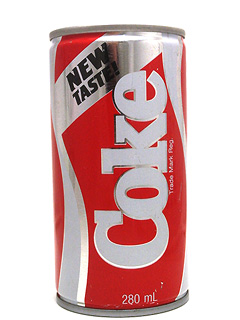
1 New Coke
Think of a brand success story, and you may well think of Coca-Cola. Indeed,
with nearly 1 billion Coca-Cola drinks sold every single day, it is the world’s
most recognized brand.
Yet in 1985 the Coca-Cola Company decided to terminate its most
popular soft drink and replace it with a formula it would market as New
Coke. To understand why this potentially disastrous decision was made, it is
necessary to appreciate what was happening in the soft drinks marketplace.
In particular, we must take a closer look at the growing competition between
Coca-Cola and Pepsi-Cola in the years and even decades prior to the launch
of New Coke.
The relationship between the arch-rivals had not been a healthy one.
Although marketing experts have believed for a long time that the competition
between the two companies had made consumers more cola-conscious,
the firms themselves rarely saw it like that. Indeed, the Coca-Cola company
had even fought Pepsi-Cola in a legal battle over the use of the word ‘cola’ in
its name, and lost.
Outside the courts though, Coca-Cola had always been ahead. Shortly
after World War II, Time magazine was already celebrating Coke’s ‘peaceful
near-conquest of the world.’ In the late 1950s, Coke outsold Pepsi by a ratio
of more than five to one. However, during the next decade Pepsi repositioned
itself as a youth brand.
This strategy was a risky one as it meant sacrificing its older customers to
Coca-Cola, but ultimately it proved successful. By narrowing its focus, Pepsi
was able to position its brand against the old and classic image of its
competitor. As it became increasingly seen as ‘the drink of youth’ Pepsi
managed to narrow the gap.
In the 1970s, Coke’s chief rival raised the stakes even further by introducing
the Pepsi Challenge – testing consumers blind on the difference
between its own brand and ‘the real thing’. To the horror of Coca-Cola’s longstanding
company president, Robert Woodruff, most of those who participated
preferred Pepsi’s sweeter formula.
In the 1980s Pepsi continued its offensive, taking the Pepsi Challenge
around the globe and heralding the arrival of the ‘Pepsi Generation’. It also
signed up celebrities likely to appeal to its target market such as Don Johnson
and Michael Jackson (this tactic has survived into the new millennium, with
figures like Britney Spears and Robbie Williams providing more recent
endorsements).
By the time Roberto Goizueta became chairman in 1981, Coke’s number
one status was starting to look vulnerable. It was losing market share not only
to Pepsi but also to some of the drinks produced by the Coca-Cola company
itself, such as Fanta and Sprite. In particular the runaway success of Diet Coke
was a double-edged sword, as it helped to shrink the sugar cola market. In
1983, the year Diet Coke moved into the number three position behind
standard Coke and Pepsi, Coke’s market share had slipped to an all-time low
of just under 24 per cent.
Something clearly had to be done to secure Coke’s supremacy. Goizueta’s
first response to the ‘Pepsi Challenge’ phenomenon was to launch an
advertising campaign in 1984, praising Coke for being less sweet than Pepsi.
The television ads were fronted by Bill Cosby, at that time one of the most
familiar faces on the planet, and clearly someone who was too old to be part
of the Pepsi Generation.
The impact of such efforts to set Coca-Cola apart from its rival was limited.
Coke’s share of the market remained the same while Pepsi was catching up.
Another worry was that when shoppers had the choice, such as in their local
supermarket, they tended to plump for Pepsi. It was only Coke’s more
effective distribution which kept it ahead. For instance, there were still
considerably more vending machines selling Coke than Pepsi.
Even so, there was no getting away from the fact that despite the proliferation
of soft drink brands, Pepsi was winning new customers. Having already
lost on taste, the last thing Coca-Cola could afford was to lose its number
one status.
The problem, as Coca-Cola perceived it, came down to the product itself.
As the Pepsi Challenge had highlighted millions of times over, Coke could
always be defeated when it came down to taste. This seemed to be confirmed
by the success of Diet Coke which was closer to Pepsi in terms of flavour.
So in what must have been seen as a logical step, Coca-Cola started
working on a new formula. A year later they had arrived at New Coke.
Having produced its new formula, the Atlanta-based company conducted
200,000 taste tests to see how it fared. The results were overwhelming. Not
only did it taste better than the original, but people preferred it to Pepsi-Cola
as well.
However, if Coca-Cola was to stay ahead of Pepsi-Cola it couldn’t have two
directly competing products on the shelves at the same time. It therefore
decided to scrap the original Coca-Cola and introduced New Coke in its
place.
The trouble was that the Coca-Cola company had severely underestimated
the power of its first brand. As soon as the decision was announced, a large
percentage of the US population immediately decided to boycott the new
product. On 23 April 1985 New Coke was introduced and a few days later
the production of original Coke was stopped. This joint decision has since
been referred to as ‘the biggest marketing blunder of all time’. Sales of New
Coke were low and public outrage was high at the fact that the original was
no longer available.
It soon became clear that Coca-Cola had little choice but to bring back its
original brand and formula. ‘We have heard you,’ said Goizueta at a press
conference on 11 July 1985. He then left it to the company’s chief operating
officer Donald Keough to announce the return of the product.
Keough admitted:
The simple fact is that all the time and money and skill poured into
consumer research on the new Coca-Cola could not measure or reveal
the deep and abiding emotional attachment to original Coca-Cola felt
by so many people. The passion for original Coca-Cola – and that is
the word for it, passion – was something that caught us by surprise. It
is a wonderful American mystery, a lovely American enigma, and you
cannot measure it any more than you can measure love, pride or
patriotism.
In other words, Coca-Cola had learnt that marketing is about much more
than the product itself. The majority of the tests had been carried out blind,
and therefore taste was the only factor under assessment. The company had
finally taken Pepsi’s bait and, in doing so, conceded its key brand asset:
originality.
When Coca-Cola was launched in the 1880s it was the only product in
the market. As such, it invented a new category and the brand name became
the name of the product itself. Throughout most of the last century, Coca-
Cola capitalized on its ‘original’ status in various advertising campaigns. In
1942, magazine adverts appeared across the United States declaring: ‘The
only thing like Coca-Cola is Coca-Cola itself. It’s the real thing.’
By launching New Coke, Coca-Cola was therefore contradicting its
previous marketing efforts. Its central product hadn’t been called new since
the very first advert appeared in the Atlanta Journal in 1886, billing Coca-
Cola as ‘The New Pop Soda Fountain Drink, containing the properties of
the wonderful Coca-plant and the famous Cola nuts.’
In 1985, a century after the product launched, the last word people
associated with Coca-Cola was ‘new’. This was the company with more
allusions to US heritage than any other. Fifty years previously, the Pulitzer
Prize winning editor of a Kansas newspaper, William Allen White had
referred to the soft drink as the ‘sublimated essence of all America stands for
– a decent thing, honestly made, universally distributed, conscientiously
improved with the years.’ Coca-Cola had even been involved with the history
of US space travel, famously greeting Apollo astronauts with a sign reading
‘Welcome back to earth, home of Coca-Cola.’
To confine the brand’s significance to a question of taste was therefore
completely misguided. As with many big brands, the representation was
more significant than the thing represented, and if any soft drink represented
‘new’ it was Pepsi, not Coca-Cola (even though Pepsi is a mere decade
younger).
If you tell the world you have the ‘real thing’ you cannot then come up with
a ‘new real thing’. To borrow the comparison of marketing guru Al Ries it’s
‘like introducing a New God’. This contradictory marketing message was
accentuated by the fact that, since 1982, Coke’s strap line had been ‘Coke is
it’. Now it was telling consumers that they had got it wrong, as if they had
discovered Coke wasn’t it, but rather New Coke was instead.
So despite the tremendous amount of hype which surrounded the launch
of New Coke (one estimate puts the value of New Coke’s free publicity at
over US $10 million), it was destined to fail. Although Coca-Cola’s market
researchers knew enough about branding to understand that consumers
would go with their brand preference if the taste tests weren’t blind, they
failed to make the connection that these brand preferences would still exist
once the product was launched.
Pepsi was, perhaps unsurprisingly, the first to recognize Coca-Cola’s
mistake. Within weeks of the launch, it ran a TV ad with an old man sitting
on a park bench, staring at the can in his hand. ‘They changed my Coke,’ he
said, clearly distressed. ‘I can’t believe it.’
However, when Coca-Cola relaunched its original coke, redubbed ‘Classic
Coke’ for the US market, the media interest swung back in the brand’s favour.
It was considered a significant enough event to warrant a newsflash on ABC
News and other US networks. Within months Coke had returned to the
number one spot and New Coke had all but faded away.
Ironically, through the brand failure of New Coke loyalty to ‘the real thing’
intensified. In fact, certain conspiracy theorists have even gone so far as to
say the whole thing had been planned as a deliberate marketing ploy to
reaffirm public affection for Coca-Cola. After all, what better way to make
someone appreciate the value of your global brand than to withdraw it
completely?
Of course, Coca-Cola has denied that this was the company’s intention.
‘Some critics will say Coca-Cola made a marketing mistake, some cynics will
say that we planned the whole thing,’ said Donald Keough at the time. ‘The
truth is we are not that dumb, and we are not that smart.’ But viewed in the
context of its competition with Pepsi, the decision to launch New Coke was
understandable. For years, Pepsi’s key weapon had been the taste of its
product. By launching New Coke, the Coca-Cola company clearly hoped to
weaken its main rival’s marketing offensive.
So what was Pepsi’s verdict on the whole episode? In his book, The Other
Guy Blinked, Pepsi’s CEO Roger Enrico believes the error of New Coke
proved to be a valuable lesson for Coca-Cola. ‘I think, by the end of their
nightmare, they figured out who they really are. Caretakers. They can’t
change the taste of their flagship brand. They can’t change its imagery. All
they can do is defend the heritage they nearly abandoned in 1985.’

Lessons from New Coke Concentrate on the brand’s perception.
In the words of Jack Trout, author of Differentiate or Die, ‘marketing is a battle of perceptions, not products’.
 Don’t clone your rivals. In creating New Coke, Coca-Cola was reversing its
brand image to overlap with that of Pepsi. The company has made similar
mistakes both before and after, launching Mr Pibb to rival Dr Pepper and
Fruitopia to compete with Snapple.

Feel the love. According to Saatchi and Saatchi’s worldwide chief executiveofficer, Kevin Roberts, successful brands don’t have ‘trademarks’. They
have ‘lovemarks’ instead. In building brand loyalty, companies are also
creating an emotional attachment that often has little to do with the
quality of the product.

Don’t be scared to U-turn. By going back on its decision to scrap original
Coke, the company ended up creating an even stronger bond between the
product and the consumer.

Do the right market research. Despite the thousands of taste tests Coca-Cola
carried out on its new formula, it failed to conduct adequate research into
the public perception of the original brand.


Kellogg’s in India

Kellogg’s is, of course, a mighty brand. Its cereals have been consumed around
the globe more than any of its rivals. Sub-brands such as Corn Flakes, Frosties
and Rice Krispies are the breakfast favourites of millions.
In the late 1980s, the company had reached an all-time peak, commanding
a staggering 40 per cent of the US ready-to-eat market from its cereal
products alone. By that time, Kellogg’s had over 20 plants in 18 countries
world wide, with yearly sales reaching above US $6 billion.
However, in the 1990s Kellogg’s began to struggle. Competition was
getting tougher as its nearest rivals General Mills increased the pressure with
its Cheerios brand. Kellogg’s management team was accused of being
‘unimaginative’, and of ‘spoiling some of the world’s top brands’ in a 1997
article in Fortune magazine.
In core markets such as the United States and the UK, the cereal industry
has been stagnant for over a decade, as there has been little room for growth.
Therefore, from the beginning of the 1990s Kellogg’s looked beyond its
traditional markets in Europe and the United States in search of more cerealeating
consumers. It didn’t take the company too long to decide that India
was a suitable target for Kellogg’s products. After all, here was a country with
over 950 million inhabitants, 250 million of whom were middle class, and
a completely untapped market potential.
In 1994, three years after the barriers to international trade had opened in
India, Kellogg’s decided to invest US $65 million into launching its number
one brand, Corn Flakes. The news was greeted optimistically by Indian
economic experts such as Bhagirat B Merchant, who in 1994 was the director
of the Bombay Stock Exchange. ‘Even if Kellogg’s has only a two percent
market share, at 18 million consumers they will have a larger market than in
the US itself,’ he said at the time.
However, the Indian sub-continent found the whole concept of eating
breakfast cereal a new one. Indeed, the most common way to start the day in
India was with a bowl of hot vegetables. While this meant that Kellogg’s had
few direct competitors it also meant that the company had to promote not
only its product, but also the very idea of eating breakfast cereal in the first
place.
The first sales figures were encouraging, and indicated that breakfast cereal
consumption was on the rise. However, it soon became apparent that many
people had bought Corn Flakes as a one-off, novelty purchase. Even if they
liked the taste, the product was too expensive. A 500-gram box of Corn
Flakes cost a third more than its nearest competitor. However, Kellogg’s
remained unwilling to bow to price pressure and decided to launch other
products in India, without doing any further research of the market. Over
the next few years Indian cereal buyers were introduced to Kellogg’s Wheat
Flakes, Frosties, Rice Flakes, Honey Crunch, All Bran, Special K and Chocos
Chocolate Puffs – none of which have managed to replicate the success they
have encountered in the West.
Furthermore, the company’s attempts to ‘Indianize’ its range have been
disastrous. Its Mazza-branded series of fusion cereals, with flavours such as
mango, coconut and rose, failed to make a lasting impression.
Acknowledging the relative failure of these brands in India, Kellogg’s has
come up with a new strategy to establish the company’s brand equity in the
market. If it can’t sell cereal, it’s going to try and sell biscuits. The news of
this brand extension was covered in depth in the Indian Express newspaper
in 2000:
The company has been looking at alternate product categories to
counter poor off take for its breakfast cereal brands in the Indian
market, say sources. Meanwhile, the Kellogg main stay – breakfast
cereals – has seen frenzied marketing activity from the company’s end.
The idea behind the effort is to establish the Kellogg brand equity in
the market.
‘The company is concentrating on establishing its brand name in the
market irrespective of the off take. The focus is entirely on being present
and visible on the retail shelves with a wide range of products,’ explains
a company dealer in Mumbia.
As per the trade, Kellogg India has disclosed to the dealers its intention
of launching more than one new product onto the market every month
for the next six months.
These rapid-fire launches were supported with extensive ‘below-the-line’
activity, such as consumer offers on half of Kellogg’s cereal boxes. Although
most of the biscuit ranges have so far been a success with children, due in part
to their low price, Kellogg’s is still struggling in the cereal category.
Although the company tried to be more sensitive to the requirements of
the market, through subtle taste alterations, the high price of the cereals
remains a deterrent. According to a study conducted by research firm
PROMAR International, titled ‘The Sub-Continent in Transition: A strategic
assessment of food, beverage, and agribusiness opportunities in India in
2010,’ the price factor will restrict Kellogg’s from further market growth.
‘While Kellogg’s has ushered in a shift in Indian breakfast habits and adapted
its line of cereal flavours to meet the Indian palate, the price of the product
still restricts consumption to urban centres and affluent households,’ the
study reports.
Kellogg’s tough ride in India has not been unique. Here are some further
examples of brands which have managed to misjudge the market:
 Mercedes-Benz. In 1995 the German car giant opened a plant in India to
produce its E-class Sedan. The car, which was targeted at the growing ranks
of India’s wealthy middle class, failed to inspire. By 1997, the plant was
using only 10 per cent of its 20,000 car capacity. ‘Indians turned up their
noses at the Sedan – a model older than those sold in Europe,’ reported
Business Week at the time. ‘Now Mercedes has to reassess its mistakes and
start exporting excess cars to Africa and elsewhere.’
 Lufthansa. Germany’s Lufthansa airline joined forces with Indian company,
the Modi Group, to launch a new domestic private airline, Modi-
Luft, in 1993. However, three years later ModiLuft had gone bust and
Lufthansa filed a lawsuit against one of the Modi brothers, claiming he
had used funds obtained from the German company in other ventures.
In return, the Modi Group accused Lufthansa of charging too much and
of producing defective planes.
 Coca-Cola. The Coca-Cola company understood that distribution was the
key to building a strong Indian brand. It therefore decided to buy out one
of India’s most successful soft drink companies and manufacturers of
popular soda brand Thums Up. However, although this gave Coca-Cola
an instant distribution network, Thums Up remained more popular than
Coke for many years. Most Indians initially thought that the new entry
to the market wasn’t fizzy enough.
 Whirlpool. When Whirlpool launched its refrigerators on the Indian
market, it found the market unwilling to buy larger sizes than the standard
165 litres.
 MTV. When MTV India was launched, the aim was to bring Western
rock, rap and pop to the sub-continent. Now, however, the music policy
has shifted to accommodate Indian genres such as bhangra.
 Domino’s Pizza. Initially, Domino’s Pizza transferred its Western offerings
direct to the Indian market, but the company eventually realized that it
had to bow to local tastes, as Arvind Nair, chief executive officer at
Domino’s Pizza India explains. ‘Initially, our focus was to stay only in
metropolitan areas, but in the last two years we have felt the need to spread
ourselves into “mini metros” and B-category towns. We have also experimented
with our taste options, especially when we went into smaller
towns. We have focused on more regional flavours now,’ he says. As a result
of this change of strategy, Domino’s came up with localized toppings such
as ‘Peppy Paneer’ and ‘Chicken Chettinad’. This move was greeted with
a wry smile from Domino’s main Indian competitor, US Pizza, which was
the first to offer local topping. ‘In 1995, when we offered tandoori chicken
and paneer toppings, some made fun of us saying, why not offer spaghetti
and pasta toppings? The same companies are now offering chole and spicy
masala pizzas,’ says Wahid Berenjian, the managing director for US Pizza.
He told the Hindu newspaper Business Line that US brands such as
Domino’s made the mistake of thinking that US tastes are universal. ‘You
cannot change the taste buds that were developed more than a thousand
years ago,’ he said.
 Citibank. When Citibank entered the Indian market, the firm’s aim was
to target only high-income earners. But, in the words of the Business Line
newspaper, Citibank soon realized that ‘in India it makes sense to go the
mass banking way rather than the class banking way.’
One of the reasons why Kellogg’s and these other brands’ passage to India
was not smooth was because they had been blinded by figures. The Indian
population may be verging on 1 billion, but its middle class accounts for only
a quarter of that figure. However, a 1996 survey conducted by the Indian
National Council on Applied Economic Research in Delhi found that the
sub-continent’s ‘consumer class’ numbers are around 100 million people at
the most, and that buying habits and tastes vary greatly between the Indian
regions. After all, India has 17 official languages and six major religions
spread throughout 25 states.
As a result, only those companies which are in tune with India’s many
cultural complexities can stand a chance. One of the companies which has
managed to get it right is Unilever. However, the conglomerate has had a
head start on those Western companies which entered the market after 1991.
Indeed, Unilever’s soap and toothpaste products have been available in India
since 1887, when the sub-continent was still the crown jewel of the British
Empire. The secret to Unilever’s longevity in India is distribution. Hindustan
Lever Limited (Unilever’s Indian arm) has products available in a staggering
total of 10 million small shops throughout rural India.
As for Kellogg’s, it remains to be seen whether its move into other product
categories, such as snack food, will be able to help strengthen its brand. The
dilemma that it may face is that if it becomes associated with biscuits rather
than cereals, core products like Corn Flakes could become a marginal part
of the company’s brand identity in India.
‘Kellogg’s is caught in a bind,’ one Indian brand analyst remarked in India’s
Business Line newspaper. ‘It realises that cornflakes can make money only in
the long haul, so it needs a product which will give it some accelerated growth
and the tonnage it is desperately looking for. However, its area of strength
worldwide lies in breakfast cereal and not in the snack food category.’
However, other impartial Indian commentators are more optimistic about
Kellogg’s future prospects within the sub-continent. Among those who
believe Kellogg’s will eventually succeed is Jagdeep Kapoor, the managing
director of Indian marketing firm Samiska Marketing Consultants. ‘With
every product offering, Kellogg’s chances improve based on its learning in the
Indian market,’ he says.
Only time will tell.

Lessons from Kellogg’s
 Do your homework. Why did Kellogg’s cereals have a tough ride in India?
‘It was just clumsy cultural homework,’ says Titoo Ahluwalia, chairman
of market research company ORG MARG in Bombay.
 Don’t underestimate local competitors. Although Indian brands were worried
they would struggle against a new wave of foreign competition following
the market opening of 1991, they were wrong. ‘Multinational corporations
must not start with the assumption that India is a barren field,’ said
C K Prahalad, business professor at the University of Michigan, in a
Business Week article. ‘The trick is not to be too big.’
 Remember that square pegs don’t fit into round holes. When Kellogg’s first
launched Corn Flakes in India it was essentially launching a Western
product attempting to appeal to Indian tastes. Globalization may be an
increasing trend, but regional identities, customs and tastes are as distinct
as ever. It may be easy for brand managers of global brands to view the
world as homogenous, where consumer demands are all the same, but the
reality is rather different. ‘There is a bigger opportunity in localizing your
offerings and the smarter companies are realizing this,’ says Ramanujan
Sridhar, chief executive officer at Indian marketing and advertising
consultancy firm Brand Comm.
 Don’t try and make consumers strangers to their culture. ‘The rules are very
clear,’ says Wahid Berenjian, the managing director for US Pizza (which
has successfully launched a range of pizzas with Indian toppings) in an
article for the Hindu newspaper, Business Line. ‘You can alienate me a bit
from my culture, but you cannot make me a stranger to my culture. The
society is much stronger than any company or product.’ Brands who want
to succeed in India and other culturally distinct markets need to remember
this.

Friday, January 18, 2008

Know more about SP Jain Interview

Why and how does SP Jain give interview calls before CAT?
By Apurv Pandit and Sonam Vij
Published: August 17, 2006
Print Email

image Mumbai's SP Jain Institute of Management and Research (SPJIMR) Joint Director Prof Sunil Rai answers this and more in a PaGaLGuY.com exclusive interview.

SP Jain is known to send GD-PI calls to candidates even before the CAT is held. Why and how is it done?

We do respect the CAT, which is an entry-level examination for the MBA education. However, how can you have the full idea about somebody’s potential using a two hour test? So we have frameworks using which we can spend more time in evaluating a candidate. How we do it is we use various criteria like good continuous education, versatility and good value system, work experience and more. We look at the candidates’ application forms and categorize them then on S, A, B and C grades. S is Super, A is Good, B is Satisfactory and so on.

So in the good continuous education criterion, all three of your class X, XII and graduation degree should have had good scores and from reputed institutions. If two school education boards and one university have seen you as a consistent performer, for instance if you have 90 in tenth and twelfth and a distinction in your college and that too from reputed schools and college, then we give you an S. Or if you have done well but not from a reputed college then we give you an A.

Second is what is called versatility and a good value system. If you have been put through some adversities in life, it makes you a better suited person. So a single parent child for example, who has seen a single mother or father struggle in life and has himself or herself struggled to complete education, has proved himself or herself in a challenging situation. Then there is the family background parameter where things like honesty are valued, for instance somebody’s father is an academician or the mother is a government servant or the grandfather was a freedom fighter, then you know the person has definitely picked up a good value system. So again, we rate this criterion on S, A, B or C. Same for quality of work experience.

Now that we have so many criteria, we prioritize. To get an interview call you have to be an S at least in one criterion. So if you are a person who plays hockey for the Indian team or have an NCC certificate you have an S. So even you have an academic A, because of this S you will get an interview call. Or if you are an academic S but you are a B in the versatility criterion you’ll get the call. But in any case, you should not be below B in anything and you should be an S in at least one thing. I think it is a very good set (of candidates) we get out of such combinations.

So once we have this shortlist, we interview them. After the CAT results are out, we use their CAT performance to sort this list. Now all the people who are eligible for SP Jain will be sorted in the descending order of their CAT performance. So the CAT is taken as a criterion but not as the primary criterion. You have proved yourself in academics, you have proved yourself in life, you are a good person and you also do well in a test. That is what we are looking at. I think it is the right way of looking at admissions. So you can be an ace in CAT but if you are not a good human being then we don’t need you.

What are the criteria for the interview calls that you send after the CAT results are out?

CAT is also a criterion. If you are an S in CAT then you receive a call. However there is weightage given to the rest of the parameters too, so even if you are a CAT S but you are not at least an A in academics, you will not make it to SP Jain.

How much time do you spend on each candidate’s CV before you take a call on whether he or she is an S or A or B in a parameter?

We have parameterized some things in the online application stage. We already have a list of reputed colleges on our server so when your percentage and college name is selected by you the computer program can pick it up and grade you accordingly.

So the computer already has a database of the good colleges?

Yes, which we keep on updating using the UGC list, the state department, student feedback and from our own experience. So for most of the parameters it is a computer-generated thing. But of course for the value system criterion, we have to manually search the forms.

How many people are roughly short listed for interview in the stage before CAT?

We receive about 15,000 applications each year. We generally shortlist about 60 pc of our total shortlist for the interview stage before the CAT takes place.

And how many of this 60 pc usually get a final call?

A proportionate number.

Can you tell us the dynamics of the two-stage group interview process that SP Jain follows?

There are two panels, which test you in a group interview. It’s about how you perform in a team. If you combine me and him with her and if you are targeting a business and the three of us don’t make a good team then the thing doesn’t happen. Therefore you should know how to perform in a team. That’s why we have a group interview concept.

There are two interview panels that see you. So out of panel A and panel B if both rate you as an S then you are through. But if Panel A says you are an S and Panel B says you are a C then there is a problem. The two panels then discuss about it and you are graded later. Sometimes there is a re-interview in which the same panels sit together or we offer it to a third panel because it is basically a judgmental decision.

How does SP Jain treat work experience before CAT?

We have four streams and of them for the marketing and finance there is no work experience criterion. Even with low work experience or no work experience, if you are excellent in studies and CAT you will still get a call for marketing and finance. Do well in the interview you will get final admission for marketing and finance. But for information management and operations experience is a must. We do not like to take anybody with less than one and a half or two years work experience. The students have to finalize their specialization at the time of applying. We believe that one needs to be focused about what he wants to do later.

How good is the judgment of students in selecting their specialization given that many of them have never worked fulltime before?

As far as marketing and finance is concerned I give it to them, their judgment is fairly good because the youth today is able to make out where they would fit in. Generally outgoing people with good communication skills, who like traveling and meeting people, are the ones who usually choose marketing. People with affinity to numbers take up finance. If people wish to change their specialization after a year they can definitely do that but they have to debate it out with us. The change should be a decision arrived out of logic and not out of frustration of not doing well. The decision should be informed and intelligently taken and not an impulsive decision. It shouldn’t be that your pal is taking finance so you also plan to change your specialization to finance.

SP Jain also asks for SOPs...

This is to check the value system of the people as well as know certain individual traits. For example a person may perform better in teams, he maybe a team player. So I ask him to write three or four of his experiences. However smart the person maybe and whatever coaching classes he must have been through, we are capable to find out the truth and make out the differences.

The SP Jain website mentions about two one-year courses… one is the EMBA and the other is PGDM. How are the two different?

The EMBA or Executive MBA is actually a one and a half year course. The difference between the two courses is that the executive MBA is for working professionals who have not left their jobs. They only come to campus for nine days in three months. In those nine days you are totally with us but the rest of the three months you remain in touch with us online on a weekly and fortnightly basis. Submit your assignments checked by your mentor in your work place to the in-house guide. That way you remain in touch six times in one and a half years. The one year PGDM on the other hand is for working professionals with high experience who have left their jobs to pursue this course.

How does your PGDM compare to ISB’s one year programme?

They are two different products. ISB’s programme is a general MBA whereas ours is a focused MBA. We are firstly focusing on information management in the operational domain and secondly the student focuses on the role he would like to take up. We customize the training according to the role each student wants to do

You have an Entrepreneurship Cell in your campus. Can you tell us how it works?

Every manager has to perform three different functions: that of a leader, a manager and an entrepreneur. Entrepreneurship makes a manager risk-taking, innovative and experimental and that is what is required in fast pace business of today. No risk, no gains. Time will tell how many will actually become entrepreneurs. We just started with the Cell last year. We have also started a program and the first batch is on. Sixteen of them will become entrepreneurs already in some time. I am expecting more and more students to take it up because more ideas are coming up.

Does S P Jain help these students in getting funds for their entrepreneurial ventures?

We have faculty who have experience in the industry, who have worked in their field and now come to SP Jain. We follow the practioners method, like how a doctor is taught by another doctor. Have you seen a surgeon teaching another surgeon who has never performed a single operation? Same is the case here. How can a professor teach students marketing if he hasn’t sold a single soap? Our entire marketing faculty has once been a part of industry for at least five to ten years. Therefore we have practioners on the faculty board including our own Dean. Therefore our students get excellent in-house consulting for auditing of ideas. Were making SP Jain a very good place for incubation of ideas.


hit counter code